
How to Improve Your Tones
I thought long and hard about making a list of ten different tips to enhance your tone proficiency, such as listening to native speakers and using tongue twisters. While undoubtedly beneficial, I realized such a lengthy list might prove tedious, and probably you wouldn’t even finish reading it, let alone taking my advice. Therefore, I've opted to provide just two tips, which I believe will prove far more impactful. I'll begin with the more useful one and finish it off with a lighthearted suggestion.
Tip 1:
All 4 tones in Chinese can actually be found in English too
First Tone (High-Level): yī/mā - Hi! - Picture how you say "Hi!" when greeting someone enthusiastically.
Second Tone (Rising): yí/má - Really? - Think of how your intonation rises when you say "Really?" expressing surprise or disbelief.
Third Tone (Falling-Rising): yǐ/mǎ - yeah - Think of the way you say "yeah". Your voice drops down low before rises up again.
Fourth Tone (Falling): yì/mà - No! - Imagine the sharp descent in tone when you say "No!" to express disagreement.
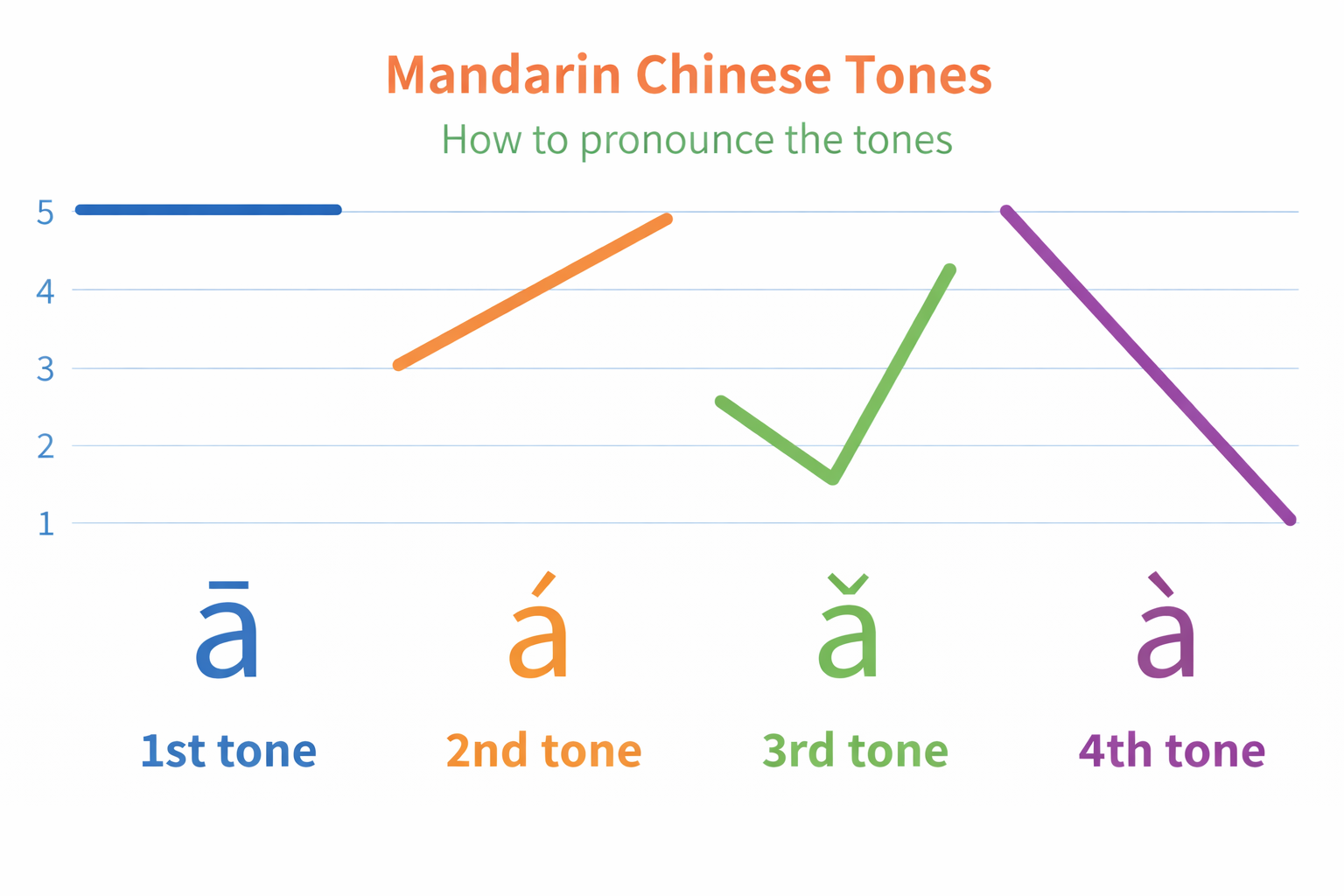
Here you can listen to the 4 tones with the English examples, and you can use this to practice along with: Tone Practice Audio
Begin by practicing the English equivalent of each tone before transitioning to a few Chinese words using the same tone. Once you're confident that your tones sound similar in both languages, proceed to combine words with different tones. As you start feeling your tones improving, advance to practicing with sentences. Continue this method for a few weeks, and before you know it, you'll find yourself pronouncing the tones effortlessly!
Tip 2
Now, here's the fun one. When practicing tones, incorporate head movements that correspond to the tone. For instance, when practicing the falling tone, tilt your head down to the left as your voice drops when pronouncing 'mà'. Do the opposite movement as your voice rises when pronouncing 'má'. Does it seem silly? Yes, it does. Will it help? Absolutely. Just be aware, it might be challenging to break this habit when speaking to others. 😄
Ready to Learn More?
Do you want a clearer path from the basics to simple real-life conversations?
My Beginner Chinese Course is made for complete beginners and learners who have studied Chinese before but still don’t feel confident speaking.
You’ll learn to form simple sentences, improve your pronunciation, and use Chinese confidently in real-life conversations: